Articles & Case Studies
Finding Golf Clubs Beyond LinkedIn
In one DiscoLike search, 6,487 US golf club records included 1,181 with a LinkedIn presence. The example shows why LinkedIn visibility is a weak proxy for a complete local market.

· updated October 6, 2026
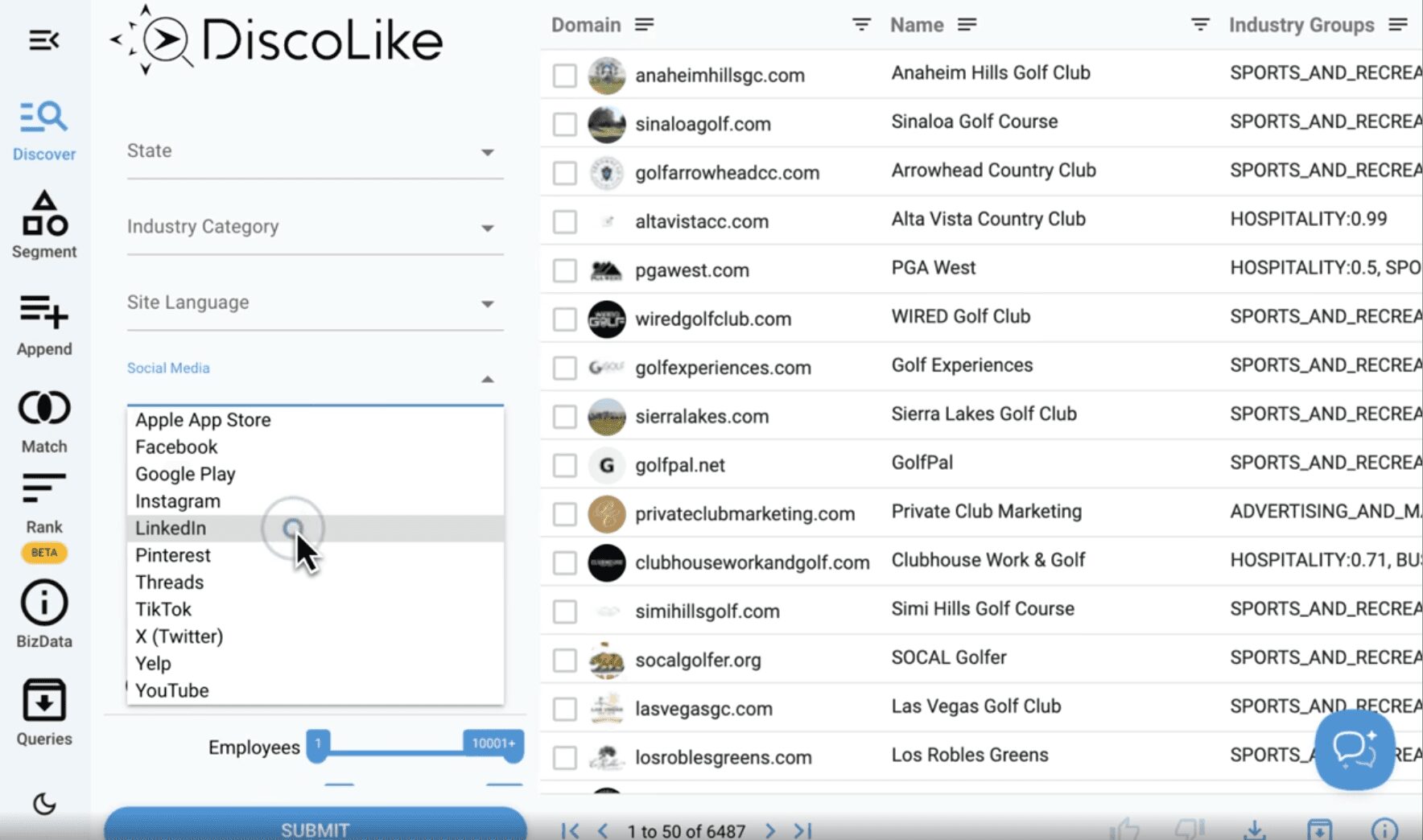
Golf clubs are a useful test of B2B data coverage. They are established businesses with websites and customer relationships, yet many have little reason to maintain a LinkedIn company page.
In our US golf club search, DiscoLike returned 6,487 records. Of those, 1,181 had a LinkedIn presence and 4,042 had a Facebook or Instagram presence in the data we collected.
What the comparison shows
The full result set was about 5.5 times the LinkedIn-visible subset. That is a comparison within one search, using the social links available in our records. It is not a controlled benchmark of every record Apollo, Clay, or another provider could return.
A missing LinkedIn link also does not prove that a profile does not exist. It does show why requiring a LinkedIn match can exclude useful candidates from a local-business campaign.
Test the gap in your own account list
Start with a narrowly defined market and the same geography across sources. Normalize domains, remove duplicates, and inspect whether each business fits.
Then compare the accepted records. Count how many are already in your CRM and how many are genuinely new. Keep separate totals for company locations if your campaign targets individual clubs rather than parent organizations.
For golf clubs, social links may also suggest an outreach channel. A Facebook or Instagram presence is a place to research the business; it is not evidence of buying intent.
Add discovery before contact enrichment
Use website-based discovery to find companies, then use the contact and workflow tools that suit your campaign. This can fit alongside an existing Apollo or Clay setup.
Run a DiscoLike search for your local vertical and compare a reviewed sample with your current list before committing to a larger export.
Related posts: