Articles & Case Studies
Build a Reliable B2B Company Data Foundation
GTM workflows become easier to maintain when company identity and validation live in a shared data layer. Domain and certificate signals help discovery but do not prove business legitimacy.

· updated October 6, 2026
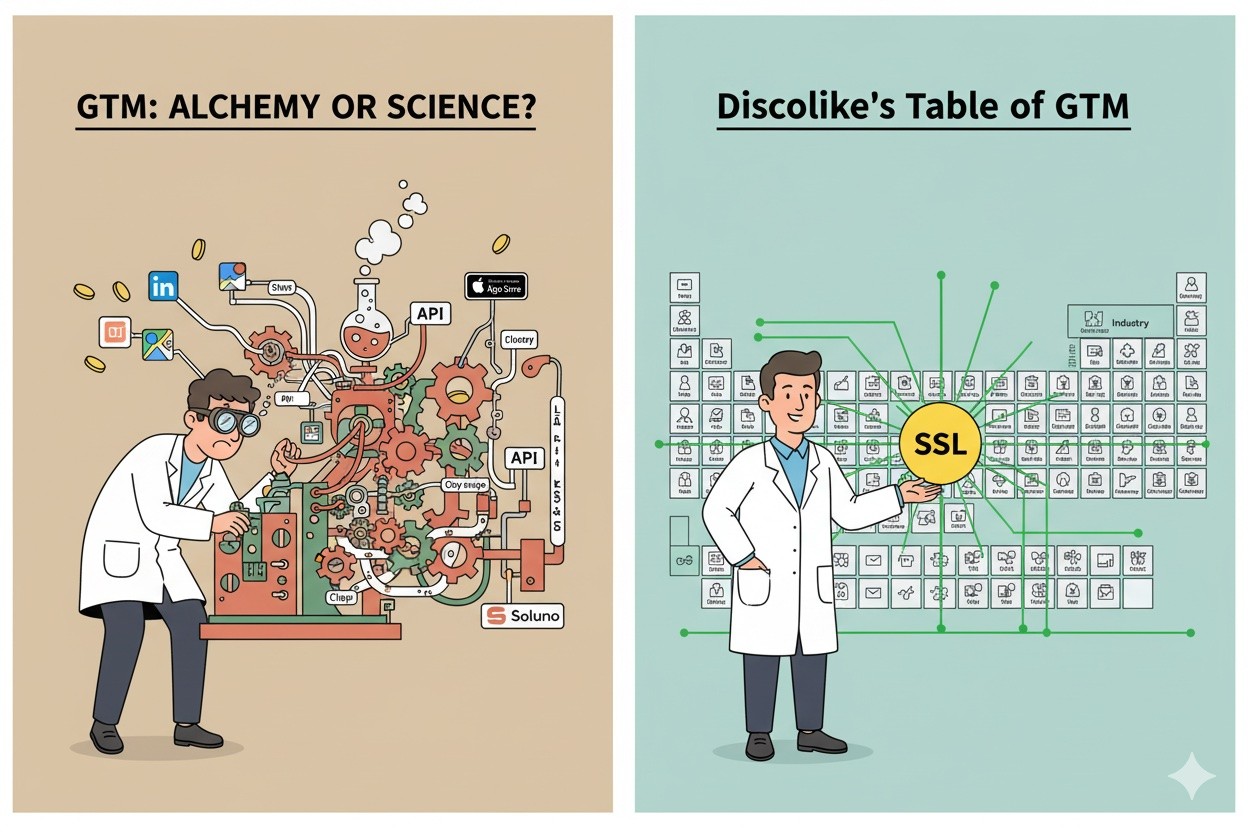
GTM teams often assemble a different sourcing recipe for every vertical: a professional network for software, Maps for local services, and specialist directories for regulated industries.
The hard part is making those records describe the same kind of thing. One source lists a legal entity, another a location, and another a website. Combining them without an identity model creates duplicates and misleading coverage counts.
Define what one account means
Choose whether your campaign targets organizations, brands, branches, or individual locations. Then decide how domains and source IDs map to that unit.
A company can operate several domains. Several businesses can also share a platform domain. Domain normalization is useful, but it cannot resolve every organization relationship by itself.
Separate discovery from validation
Network data, including certificate-related signals, can help discover domains. Website analysis can help classify the business and identify inactive or parked pages.
A domain-validated certificate establishes control of a domain for certificate issuance. It does not certify that the operator is a legitimate business. Let’s Encrypt explains its domain-validation scope in its certificate FAQ.
Use multiple checks rather than allowing one infrastructure signal to stand in for company quality.
Store the decisions once
Maintain normalized identifiers, source information, validation status, and observation dates in the account record. Let downstream workflows reuse that work.
This is where a searchable company index can reduce repeated effort. You can retrieve relevant businesses first, then reserve custom research for questions the index does not answer.
Evaluate the foundation by what survives review
DiscoLike builds company profiles from business website content and network signals. Test its contribution against the same qualification process you apply to other sources.
Track duplicates, unresolved identity matches, and new qualified accounts. Those measures show whether the shared foundation is saving work.
Explore company discovery before building another vertical-specific extraction chain.
Related posts: